
Month: December 2025
Finding Our Eternal Home: A Look at God’s Many Dwelling Places
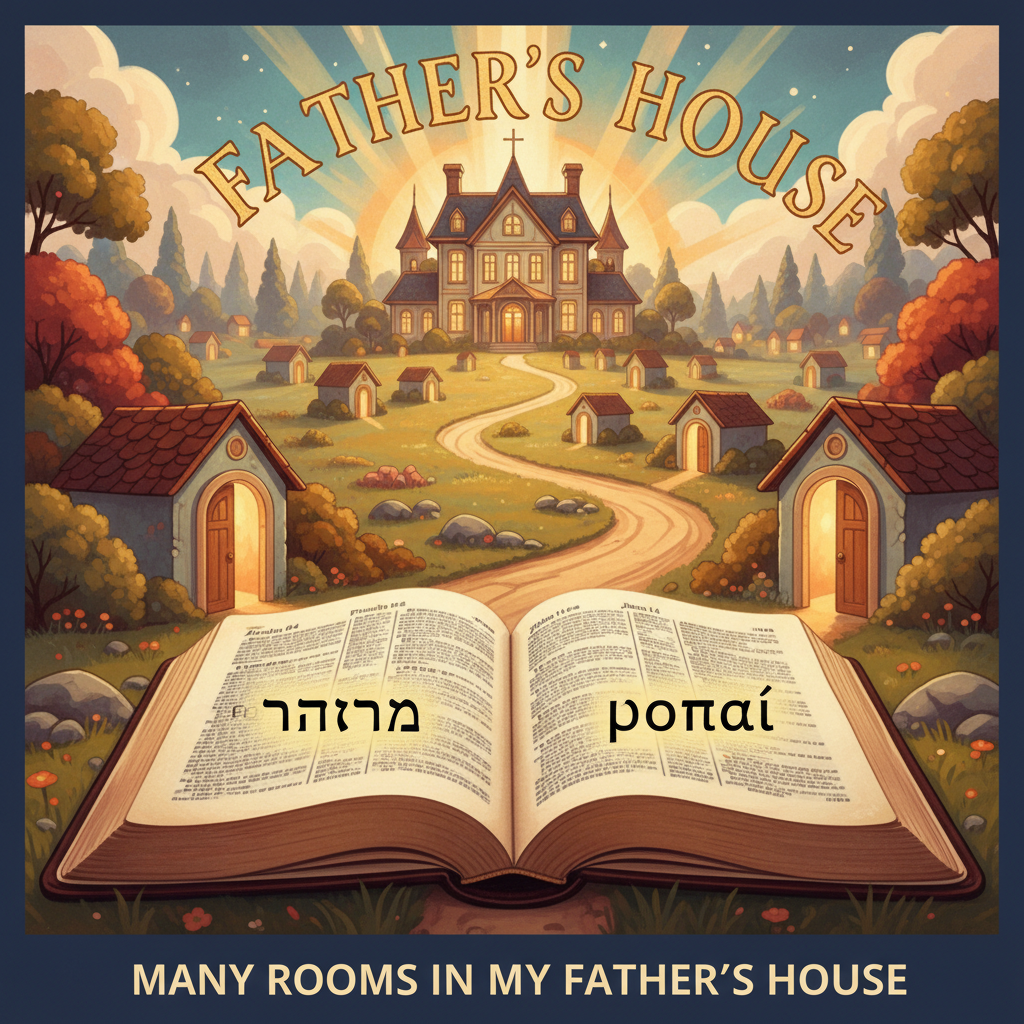
Have you ever noticed how Scripture often uses grammar to reveal deeper spiritual truths? Two powerful passages—one from the Psalms and one from the words of Jesus—beautifully illustrate God’s abundant provision for His people through the use of a simple linguistic feature: the plural noun.
Let’s start in Psalm 84:1–2. In the original Hebrew, the word translated as “dwelling place” is mishkanotekha—a plural form. It literally means “your dwelling places.” This isn’t a mistake or a reference to multiple physical temples. Instead, it’s a common Hebraism used to express majesty, fullness, and the all-encompassing nature of God’s presence. The psalmist isn’t just talking about a single location; he’s marveling at the abundant, multi-faceted refuge that God provides.
This same theme carries right into the New Testament. In John 14:2, Jesus tells His disciples, “In my Father’s house are many dwelling places” (the Greek word is monai). Some translations say “mansions,” but the core idea is the same: prepared, personal abodes within God’s household. Jesus wasn’t describing a heavenly subdivision with literal mansions. He was using the plural to emphasize the certainty, generosity, and tailored provision He has made for each of His followers.
What’s the takeaway?
God doesn’t do things minimally. When He makes a home for us, it’s not a cramped spiritual bunker—it’s a place of belonging, designed with divine intentionality. Whether in the poetic longing of the Psalms or the comforting promise of Christ, Scripture consistently points us toward a God whose love is expansive, personal, and majestically abundant.
Why I Believe in a Locked Door: A Common-Sense Case for Border Security

Let’s talk about borders using an analogy everyone can understand: your home.
You lock your doors at night. You probably don’t let strangers wander into your house uninvited. This isn’t because you’re a bad person or unwelcoming; it’s because you’re responsible. You have a duty to protect your family from the very real risks of home invasion, burglary, or worse.
A nation’s border is its front door. When that door is left unlocked—or worse, intentionally opened—it’s an abandonment of the most basic duty of a government: to protect its citizens.
Here’s why this matters:
- Vetting is Basic Responsibility. Would you let a stranger claiming to be a repairman into your home without checking his ID or credentials? Of course not. Yet, we’ve allowed millions to enter our country without knowing who they are, their criminal history, or their intentions. This isn’t security; it’s recklessness.
- Our Resources Are Finite. Every unvetted person who enters represents a potential strain on our schools, hospitals, and social safety nets—all paid for by American taxpayers. It’s like having uninvited guests move in, eat your food, and run up your bills while you’re trying to provide for your own family.
- National Security is Not a Joke. Among the millions who have entered, we know for a fact that cartel members, gang affiliates, and even individuals on the terrorist watchlist have been caught. How many more got through? When your front door is open, you don’t just get friendly neighbors; you also get people who wish you harm.
- A Nation is More Than a Place. It’s a people with a shared language, culture, and set of values. Mass, unvetted immigration doesn’t enrich that shared identity; it fractures it. It’s the difference between welcoming a few guests and having a crowd force their way in and demand you change your way of life to suit them.
A locked door isn’t about hate. It’s about love for your family, your community, and your country. It’s about the fundamental right to safety, security, and self-preservation.
It’s time we started acting like a nation that values its own home enough to lock the door.